What is IPTV, and how does it actually work?
A plain-English explanation of internet television: what it is, how a subscription works, what it costs and what to check before you buy.
What IPTV actually means
IPTV stands for Internet Protocol Television. Instead of a signal arriving through a coaxial cable or a satellite dish, the television picture arrives as data over your normal internet connection — the same pipe that carries your email and your video calls.
That is the whole idea. Everything else — the apps, the logins, the channel lists — is just plumbing built on top of it. If you have ever watched a live stream on YouTube, you have already used the underlying technology.
How a subscription works in practice
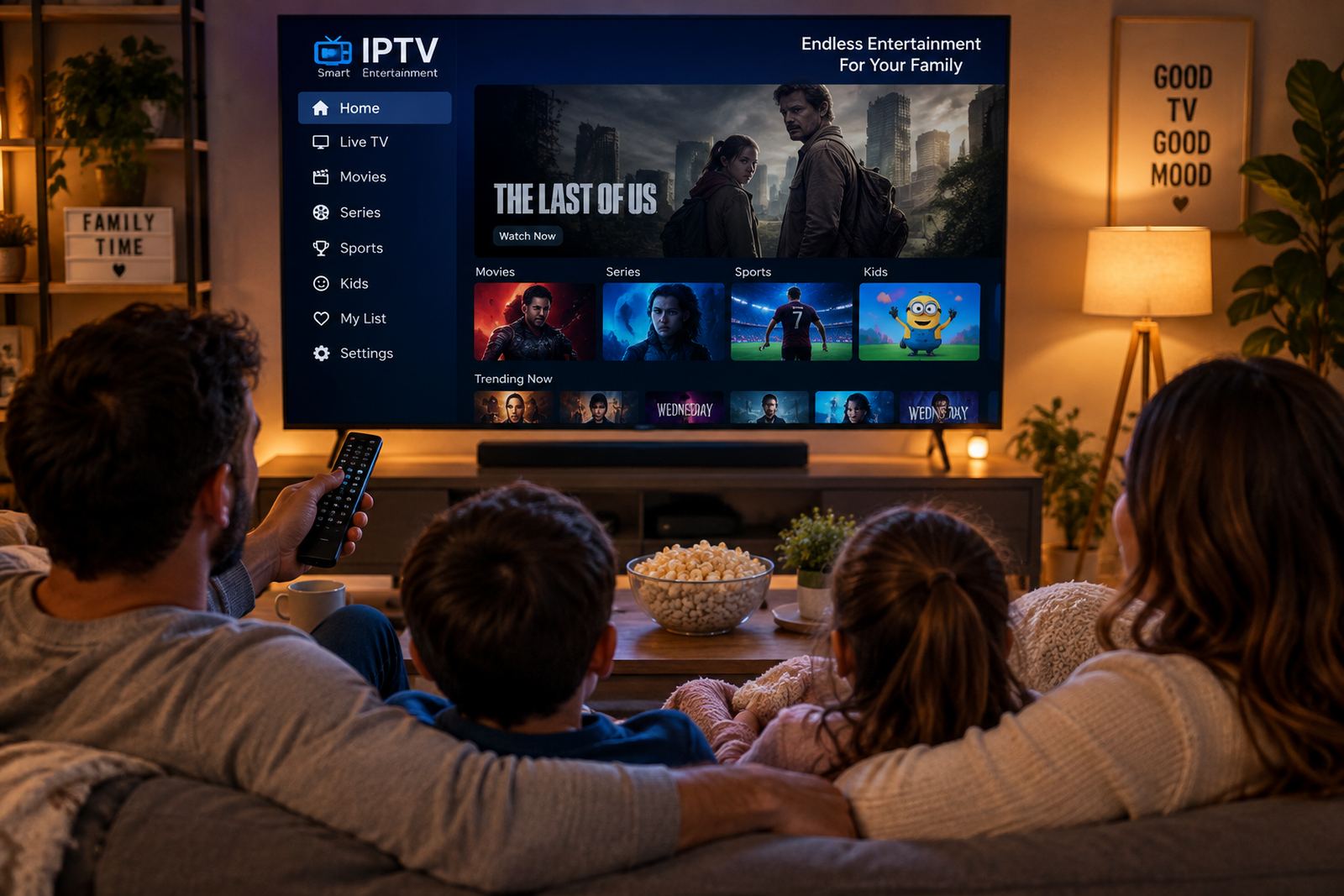
A provider runs servers that receive channel feeds and re-transmit them to subscribers. You get a set of login details, you enter those into a player app on your TV, stick or phone, and the app pulls the channel list and the TV guide from the server.
- You order a plan and pay once for the term.
- The provider creates a line on their panel and sends you a portal URL, a username and a password.
- You install a free player app and enter those details.
- The channel list and the electronic programme guide download, and you watch.
What it costs, and why
Most credible providers sit somewhere between $8 and $15 a month when you pay for a longer term. Anything dramatically below that is usually a reseller with no infrastructure of their own who will disappear in a month; anything far above it is usually a reseller charging a premium for the same feed.
Five things to check before you pay
- A trial. Any provider confident in their servers will let you test on your own connection.
- A real support channel. A WhatsApp number answered by a person beats a contact form.
- A refund policy in writing. Not a promise in a chat message.
- No auto-renewal. You should not have to cancel anything.
- Honest answers. Ask whether they carry a specific channel. A provider who says 'yes, everything' to every question is not being straight with you.
Is it legal?
The technology is entirely legal — it is how most broadcasters now deliver their own apps. What matters legally is the licensing behind the content, and that varies by provider and by country. Rules differ significantly between jurisdictions, and it is worth understanding the position where you live before you subscribe to any service. We are not lawyers and this is not legal advice.
Ready to try it?
Plans from $39.99, activated in minutes, cancel nothing because nothing renews.
No payment is taken on this page. We send an invoice first.